

Hair Transplant in Lahore
Overview
- Condition : New
- Monthly installment: No
Features:
- Free Parking
- Free Wifi
- Free Consultation
Description
Hair loss is a concern that affects millions of people worldwide. Whether it develops gradually or occurs due to a medical condition, losing hair can change a person’s appearance and affect their confidence. Men commonly experience receding hairlines and baldness around the crown, while women may notice gradual thinning and reduced hair volume.
Fortunately, advancements in hair restoration have made it possible to address many forms of permanent hair loss through modern surgical procedures. A hair transplant is one of the most effective options for suitable individuals who want to restore their natural hairline and improve hair density.
Choosing a Hair transplant in Lahore gives patients access to different hair restoration techniques, including Follicular Unit Extraction (FUE), Follicular Unit Transplantation (FUT), and Direct Hair Implantation (DHI). These procedures involve transferring healthy hair follicles from a donor region to areas affected by baldness or thinning.
However, successful hair restoration requires more than selecting a particular technique. Proper diagnosis, donor hair assessment, surgical expertise, realistic expectations, and postoperative care all contribute to the final outcome.
This detailed guide explores hair transplant procedures in Lahore, their benefits, treatment costs, eligibility requirements, recovery stages, possible complications, and important considerations before undergoing surgery.
What Is Hair Transplantation and How Does It Work?
Hair transplantation is a surgical hair restoration procedure that involves relocating healthy hair follicles from one part of the body to another. In most cases, follicles are taken from the back and sides of the scalp, where hair is generally more resistant to hereditary hair loss.
The extracted follicles are implanted into areas experiencing permanent hair loss. Once successfully established, these follicles can produce new hair according to their natural growth cycles.
Hair transplantation is commonly used for:
- Male pattern baldness.
- Receding hairlines.
- Frontal hair loss.
- Crown baldness.
- Reduced hair density.
- Selected cases of female pattern hair loss.
- Hair loss caused by injuries or burns.
- Certain types of scar-related hair loss.
- Eyebrow and beard restoration.
The procedure is designed to redistribute existing healthy hair rather than create new follicles. Therefore, the availability and quality of donor hair are important factors when determining whether someone is a suitable candidate.
Why Consider Hair Transplant in Lahore?
Lahore has developed into an important centre for cosmetic and medical treatments in Pakistan. People from different regions visit the city to explore hair restoration services and consult medical specialists.
There are several considerations that make Lahore an option for individuals seeking hair transplantation.
Access to Specialized Hair Restoration Services
Patients can find clinics offering different hair restoration procedures. These include traditional strip harvesting, modern follicular extraction, and specialized implantation techniques.
Professional Medical Consultation
A proper hair transplant begins with an assessment by a qualified medical professional. Patients can discuss their hair loss pattern, donor hair availability, medical history, and desired results.
Multiple Treatment Approaches
Hair loss does not affect everyone in the same way. Some patients may benefit from surgical restoration, while others may achieve better results through medication or non-surgical therapies.
Personalized Hairline Design
Hairline design is an important part of the cosmetic outcome. A suitable design should consider facial proportions, age, natural hair direction, and the possibility of future hair loss.
Accessibility for Patients Across Pakistan
Patients from Islamabad, Multan, Faisalabad, Sargodha, Gujranwala, and other cities may travel to Lahore for medical consultations and surgical procedures.
When selecting a clinic, patients should prioritize medical qualifications, surgical experience, hygiene standards, and transparent treatment planning.
Common Signs That You May Need Hair Restoration
Not every person experiencing hair shedding needs a hair transplant. However, certain patterns may indicate permanent hair loss that could benefit from specialist evaluation.
Receding Hairline
A receding hairline usually develops around the temples and frontal scalp. It is particularly common in men experiencing hereditary baldness.
Thinning Crown
Some individuals gradually lose hair density around the crown. The affected area may expand over time.
Widening Parting
Women experiencing pattern hair loss may notice that their central hair part becomes wider as overall hair density decreases.
Reduced Hair Density
Hair may become visibly thinner even when complete bald patches are not present.
Permanent Bald Areas
Long-standing bald areas may indicate that hair follicles have become inactive or disappeared. A specialist can determine whether transplantation is appropriate.
Early diagnosis is important because some causes of hair loss are reversible with medical treatment.
Types of Hair Transplant Techniques in Lahore
Modern hair transplantation involves different methods of extracting and implanting hair follicles. Understanding their differences can help patients discuss suitable options with their surgeon.
1. FUE Hair Transplant – A Minimally Invasive Extraction Technique
Follicular Unit Extraction, commonly called FUE, involves removing individual follicular units from the donor area using specialized micro-punch instruments.
Unlike strip harvesting, this technique does not require removing a long section of scalp.
FUE Procedure
The procedure generally follows these steps:
- The surgeon examines the donor and recipient areas.
- The scalp is prepared for surgery.
- Local anesthesia is administered.
- Individual follicular units are extracted.
- Extracted grafts are examined and preserved.
- Small recipient sites are created.
- The follicles are implanted according to the planned hairline and growth direction.
Benefits of FUE
- No long linear donor scar.
- Individual follicle extraction.
- Small circular extraction scars.
- Suitable for many hair restoration cases.
- Relatively comfortable donor-area recovery.
- Can accommodate different hairstyle preferences.
Although FUE is widely used, the technique requires precision. Excessive extraction can result in visible thinning in the donor region.
2. FUT Hair Transplant – Traditional Strip Method
Follicular Unit Transplantation, or FUT, is a surgical method in which a narrow strip of hair-bearing scalp is removed from the donor region.
The strip is divided into individual follicular units under magnification before the grafts are implanted into the recipient area.
FUT Procedure
- The surgeon identifies a suitable donor region.
- Local anesthesia is administered.
- A strip of scalp is removed.
- The donor wound is closed surgically.
- Follicular units are separated from the strip.
- Recipient sites are prepared.
- The extracted grafts are implanted.
Benefits of FUT
- Can provide a substantial number of grafts in selected cases.
- May be useful when a larger graft session is required.
- Does not necessarily require shaving the entire donor region.
- Can be incorporated into carefully planned donor management.
Limitations of FUT
The primary disadvantage is the linear scar left in the donor region. Some patients may also experience postoperative tightness or discomfort.
3. DHI Hair Transplant – Direct Hair Implantation
Direct Hair Implantation is an implantation approach that uses a specialized instrument known as an implanter pen.
The hair follicles are extracted from the donor region and placed into the implanter device. The surgeon then inserts the follicles into the recipient area.
DHI Procedure
- Donor hair is examined.
- Healthy follicular units are extracted.
- Grafts are prepared.
- Follicles are loaded into the implantation device.
- The surgeon implants them into the selected area.
- Postoperative care instructions are provided.
Advantages of DHI
- Controlled graft placement.
- Detailed management of implantation angles.
- Useful for selected hairline procedures.
- Can help achieve natural hair direction.
- Offers another option for customized restoration.
DHI is not necessarily better than FUE or FUT. The appropriate method depends on the surgeon’s expertise and the patient’s individual requirements.
Hair Transplant for Different Areas of the Scalp
Hair restoration can target different regions depending on the patient’s hair loss pattern.
Frontal Hairline Restoration
The frontal hairline is one of the most noticeable areas of the scalp. Receding temples and frontal baldness can change facial appearance.
Hair transplantation can help create a more balanced hairline by placing carefully selected grafts in the frontal region.
Single-hair follicular units are commonly used near the front to create a softer and more natural transition.
Crown Hair Transplant
The crown is the circular area at the back of the upper scalp. Hair loss in this region may develop gradually and cover a large area.
Crown restoration requires careful planning because the natural hair growth pattern follows a spiral or whorl.
The surgeon must consider the direction of existing hair and the available donor supply.
Mid-Scalp Restoration
The mid-scalp connects the frontal and crown regions. Patients with extensive hair loss may need a comprehensive plan that distributes grafts across multiple areas.
The available donor hair should be allocated carefully to achieve balanced coverage.
Temple Restoration
The temples are located on both sides of the frontal hairline. Restoration in these areas requires precise attention to hair angle, direction, and density.
An overly dense or poorly designed temple area can appear unnatural.
Who Is Eligible for a Hair Transplant?
Hair transplantation is most suitable for people with permanent hair loss who have sufficient healthy donor follicles.
Potential candidates generally include individuals who:
- Have hereditary pattern baldness.
- Experience a receding hairline.
- Have stable or appropriately assessed hair loss.
- Possess sufficient donor hair.
- Have realistic expectations.
- Are medically fit for surgery.
- Have no uncontrolled scalp infection or active inflammatory condition.
Hair Transplant for Younger Patients
Younger individuals may seek treatment because they are concerned about early hairline recession.
However, hair loss can continue progressing with age. Performing surgery without considering future baldness may result in an unnatural appearance.
A specialist may recommend medical treatment and monitoring before surgery.
Hair Transplant for Older Patients
Older individuals may also be suitable candidates if their general health and donor hair quality allow surgery.
Age alone does not determine eligibility.
Hair Transplant for Women
Women with selected forms of permanent hair loss may benefit from transplantation.
However, diffuse thinning, hormonal disorders, and certain medical conditions require careful evaluation before surgical treatment.
What Happens During a Hair Transplant Consultation?
A consultation allows the surgeon to determine whether hair transplantation is an appropriate solution.
The assessment generally includes several important stages.
Medical History: The doctor reviews previous illnesses, medications, allergies, and previous hair restoration treatments.
Scalp Examination: The pattern and severity of hair loss are examined.
Donor Hair Evaluation: The specialist assesses follicle density, hair thickness, and available donor capacity.
Hair Loss Diagnosis: The doctor identifies the likely cause of thinning or baldness.
Graft Calculation: An approximate graft requirement is determined.
Treatment Planning: The surgeon discusses the appropriate technique, expected results, limitations, and possible risks.
A patient should never feel pressured to undergo surgery before receiving a clear explanation of the proposed treatment.
Hair Transplant Procedure: Complete Treatment Journey
Understanding the surgical process helps patients prepare for the procedure.
Before Surgery
The surgeon examines the scalp and confirms the treatment plan. Patients may be asked to follow specific instructions regarding medications, smoking, alcohol, and scalp preparation.
Blood tests or other investigations may be requested when clinically necessary.
During Surgery
Hair transplantation is usually performed under local anesthesia.
The surgeon extracts healthy follicles from the donor region and prepares them for implantation.
The recipient area is then prepared, and the grafts are inserted according to the planned distribution and direction.
After Surgery
The medical team checks the scalp and provides postoperative instructions.
Patients may receive guidance about:
- Sleeping position.
- Washing the scalp.
- Medication.
- Physical activity.
- Sun exposure.
- Follow-up appointments.
The procedure generally takes several hours, depending on the number of grafts and complexity of the case.
Hair Transplant Cost in Lahore
The price of a hair transplant is an important consideration for many patients.
However, there is no universal treatment price because different individuals require different surgical plans.
In Lahore, hair transplant prices may vary significantly depending on the number of grafts, surgeon’s experience, selected procedure, and clinic facilities.
For general budgeting, some treatment providers in Pakistan advertise prices beginning around PKR 50,000, while more extensive procedures can cost several hundred thousand rupees. These figures should be treated as broad estimates rather than verified quotations from individual clinics.
Main Factors That Influence Cost
Number of Grafts: The larger the treatment area, the more follicles may be required.
Technique: FUE, FUT, and DHI may involve different pricing structures.
Surgeon’s Expertise: Professional qualifications and surgical experience may affect the total fee.
Clinic Facilities: Surgical equipment, sterilization, medical staff, and operating facilities contribute to costs.
Treatment Complexity: Previous transplant surgery, extensive baldness, and limited donor hair can make treatment more complicated.
Aftercare: Some packages include postoperative medication and follow-up appointments, while others charge separately.
Questions to Ask Before Paying for Treatment
- Is the consultation included?
- How many grafts are planned?
- Who will perform the surgery?
- Which technique will be used?
- Are medications included?
- Are follow-up appointments included?
- What happens if complications develop?
- Is there a separate charge for postoperative care?
A transparent clinic should explain all costs before surgery.
Estimated Hair Graft Requirements
Graft requirements vary depending on the patient’s scalp condition and desired coverage.
The following figures are general examples:
| Treatment Area | Estimated Grafts |
|---|---|
| Minor Hairline Correction | 700–1,200 |
| Temple Restoration | 800–1,500 |
| Receding Hairline | 1,200–1,800 |
| Frontal Scalp | 1,500–2,500 |
| Mid-Scalp | 1,500–2,500 |
| Crown | 1,000–2,000 |
| Extensive Baldness | 3,000–4,500+ |
These are not fixed treatment recommendations.
A graft may contain one, two, three, or more hairs. Therefore, the number of grafts should not be confused with the total number of transplanted hairs.
A good surgeon prioritizes appropriate distribution and donor preservation instead of extracting the maximum possible number of follicles.
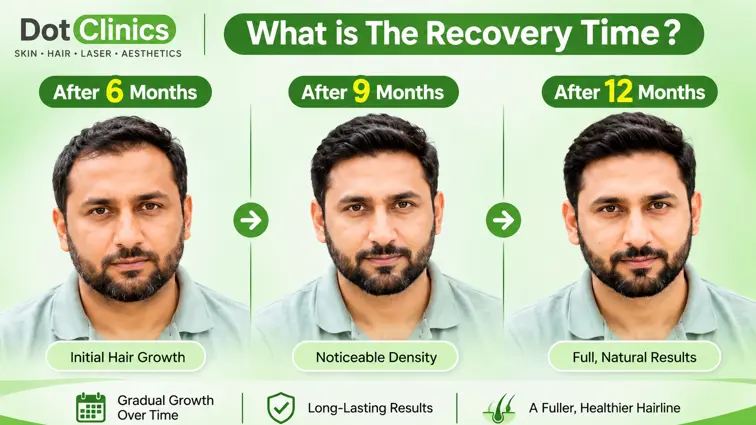
How Long Does It Take to Recover?
Hair transplant recovery takes place in stages. The scalp needs time to heal, and the transplanted follicles require several months to produce visible new hair.
Days 1–3: Initial Healing
Mild swelling, redness, tenderness, and small crusts may develop around the implanted follicles.
Patients should avoid unnecessary contact with the scalp.
Days 4–7: Scalp Recovery
The treated area gradually begins healing. Gentle washing may be started according to the surgeon’s instructions.
Weeks 2–4: Temporary Hair Shedding
Many transplanted hair shafts fall out during this period. This is commonly called shock loss or postoperative shedding.
The follicles can remain healthy beneath the skin.
Months 3–4: Early Hair Growth
New hair may start appearing. The initial strands can be thin and uneven.
Months 5–6: Visible Improvement
More transplanted hair becomes visible, and the treatment area may start looking fuller.
Months 8–12: Continued Growth
Hair thickness and coverage continue developing.
Months 12–18: Mature Results
The final cosmetic appearance becomes clearer, although individual growth patterns vary.
Advantages of Hair Transplant Surgery
Hair transplantation can offer several benefits to appropriately selected patients.
Natural Hair Restoration
Transplanted hair follicles are placed according to the natural direction and distribution of existing hair.
Long-Term Improvement
Hair follicles taken from suitable donor regions can continue growing for many years.
Improved Hairline Appearance
The procedure can address receding temples and restore a more balanced frontal hairline.
Better Hair Coverage
Transplantation can improve density in selected bald and thinning areas.
Minimal Daily Maintenance
After complete healing, transplanted hair can generally be washed, cut, and styled like natural hair.
Personalized Cosmetic Results
The surgical plan can be adjusted to suit facial proportions, hair characteristics, and patient expectations.
Potential Side Effects and Safety Considerations
Hair transplantation is a surgical procedure and carries potential risks.
Common temporary effects include:
- Mild swelling.
- Scalp redness.
- Itching.
- Small crusts.
- Tenderness.
- Temporary numbness.
- Postoperative shedding.
Less common complications may include:
- Infection.
- Bleeding.
- Scarring.
- Poor graft survival.
- Uneven hair growth.
- Unnatural hairline design.
- Donor-area thinning.
- Persistent sensory changes.
Before surgery, patients should discuss their medical history and any medications with the surgeon.
A qualified medical professional should also explain the possibility of future hair loss and whether additional treatment may be needed.
How to Maintain Hair Transplant Results
Surgical restoration is only one part of long-term hair management.
Patients should take steps to protect their existing hair and maintain scalp health.
Follow Postoperative Instructions
The surgeon’s instructions regarding washing, medication, physical activity, and scalp protection should be followed carefully.
Manage Existing Hair Loss
Natural hair around the transplanted region may continue thinning. A dermatologist can recommend suitable treatments to manage progressive hair loss.
Maintain a Balanced Diet
A nutritious diet containing sufficient protein, iron, and other essential nutrients supports general hair health.
Avoid Unnecessary Hair Treatments
Avoid aggressive chemical treatments or procedures during the recommended healing period.
Attend Follow-Up Appointments
Regular follow-up helps the medical team evaluate healing and monitor hair growth.
Hair Transplant vs. PRP: Which Is More Suitable?
PRP and hair transplantation are different treatments with different purposes.
PRP involves injecting platelet-rich plasma prepared from the patient’s blood into the scalp. It may help improve hair density in certain patients with existing hair follicles.
Hair transplantation involves surgically relocating follicles to areas affected by permanent hair loss.
| Comparison | Hair Transplant | PRP |
|---|---|---|
| Treatment | Surgical | Non-surgical injection |
| Donor Hair | Required | Not required |
| Main Purpose | Relocate follicles | Support hair growth |
| Completely Bald Areas | Can treat suitable areas | Generally ineffective |
| Treatment Sessions | One or more surgical sessions | Usually multiple sessions |
| Maintenance | May need management of existing hair loss | Repeat sessions may be required |
A dermatologist can help determine which approach is appropriate.
Common Mistakes to Avoid When Choosing a Hair Transplant Clinic
Patients should avoid making treatment decisions based only on advertisements or promotional offers.
Some common mistakes include:
Choosing the Cheapest Option: Extremely low prices may involve compromises in surgical planning, staffing, or aftercare.
Ignoring Medical Qualifications: Always verify the credentials and registration of the surgeon responsible for the operation.
Expecting Immediate Results: Hair restoration is a gradual process that may take 12–18 months.
Ignoring Donor Hair Limitations: The donor area has a finite supply of healthy follicles.
Believing Guaranteed Claims: No clinic can responsibly guarantee identical outcomes for every patient.
Skipping Follow-Up Visits: Monitoring recovery and hair growth is important for evaluating treatment success.
Frequently Asked Questions About Hair Transplant in Lahore
1. How much does a hair transplant cost in Lahore?
The cost depends on graft requirements, technique, surgeon’s experience, and clinic facilities. Patients should obtain an individualized quotation after a scalp examination.
2. Which hair transplant method gives the best results?
FUE, FUT, and DHI can all provide satisfactory results when performed appropriately. The best technique depends on individual hair characteristics and surgical requirements.
3. Is hair transplantation permanent?
Transplanted follicles from suitable donor regions can provide long-lasting growth. However, untreated natural hair may continue thinning over time.
4. How many grafts are required for a hair transplant?
Some patients need fewer than 1,000 grafts, while extensive baldness may require several thousand. The exact number depends on donor capacity and treatment goals.
5. Is hair transplant surgery painful?
The procedure is performed under local anesthesia. Patients may experience mild discomfort during injections and temporary soreness after surgery.
6. When can I wash my hair after transplantation?
The timing depends on the surgical technique and the surgeon’s instructions. Patients should avoid washing or rubbing the scalp until advised that it is safe.
7. Can transplanted hair fall out?
Yes. Temporary shedding of transplanted hair shafts is common during the first few weeks. New growth generally begins over the following months.
8. Can women have hair transplants?
Yes. Women with suitable donor hair and appropriate patterns of hair loss may be candidates after medical assessment.
9. Can a hair transplant treat a completely bald area?
It can restore hair in suitable bald areas if sufficient donor follicles are available. However, the final density depends on donor supply and the size of the recipient area.
10. How long does the procedure take?
Many procedures take approximately four to eight hours, although larger or more complex sessions may take longer.
11. Is FUE better than FUT?
FUE avoids a long linear scar, whereas FUT may provide a substantial number of grafts in selected patients. Neither technique is universally superior.
12. Can I return to work after surgery?
Patients with desk-based jobs may return within several days, depending on their recovery and the surgeon’s advice. Physically demanding work may require a longer break.
13. Can I undergo a second hair transplant?
Yes, selected patients may undergo another procedure if sufficient donor hair remains and the scalp has recovered appropriately.
14. Does a hair transplant leave scars?
Yes. FUE leaves small individual scars, while FUT generally produces a linear donor scar.
15. Can I exercise after a hair transplant?
Strenuous exercise should be avoided during the initial recovery period. Your surgeon will advise when normal physical activities can safely resume.
Final Thoughts
Hair loss can be frustrating, especially when it begins affecting appearance and self-confidence. Fortunately, modern hair restoration procedures provide several options for individuals seeking to improve hair density and restore their natural hairline.
A hair transplant in Lahore can be a suitable long-term solution for people with hereditary baldness, receding hairlines, and certain types of permanent hair loss. Techniques such as FUE, FUT, and DHI offer different approaches to extracting and implanting healthy hair follicles.
The key to a successful outcome is careful planning. Patients should select a qualified surgeon, understand the limitations of their donor area, receive a realistic graft estimate, and follow the recommended aftercare routine.
Rather than making a decision based solely on price or promotional claims, arrange a professional consultation and compare treatment plans carefully. An informed approach can help you achieve natural-looking results while protecting your long-term hair restoration options.




Leave feedback about this